How Important is Your Management Team when Selling to…

By John Herubin,
Managing Director

The M&A market has once again reached activity levels nearing the pre-recession peaks. There are numerous reasons for this level of activity, but one of the more visible influences is the growth and availability of funds to purchase companies from financial buyers, more specifically private equity groups (PEGs). You have likely heard the saying “business is people”, and this axiom is being demonstrated by many PEG buyers in today’s market, where management teams have become a particular focus. We have increasingly seen PEGs place an emphasis on existing/in-place management teams as essential for determining, maintaining and increasing an entity’s value (their investment). Strategic buyers are generally less concerned with management strength as they will likely consolidate/eliminate redundant positions and functions to realize efficiency and operational synergies, although even some strategics will need key managers for an acquisition. Many of these PEG buyers do not have the “bench strength” to place key management people at the acquired company, and it may take time and significant expense to find qualified management, or augment and supplement existing key management employees. Depending on the particular business, key management employees may include sales managers or key sales people, CIO, CFO, COO, CTO, product or design engineers, or anyone viewed as being integral or essential to the continuing growth of the sales, operations, or customer/vendor relationships of a business. This current emphasis on “people” should not be ignored or minimized by a selling owner.

We have seen attractive offers erode in value after operational due diligence reveals that the management team is not very strong in a capacity desired by the PEG buyer to maintain or increase the profitability of the business. Many times the buyer is not directly exposed to the key management employees until the latter stages of due diligence, so making sure the employees are capable of articulating or demonstrating their competency and value is crucial to the seller.

Selling owners should continually assess the strength and weaknesses of their management team. The sooner before a sale (1-5 years) an owner begins looking at management team strength, the more options available to ensure the management team will ultimately be desirable and valuable post-sale. We have seen companies enhance their management teams through any or all of the following:

  • Hire from competitors
  • Executive search firms
  • Through acquisition
  • Recommendations from advisory boards
  • Consultation with potential buyer pre-sale

Most deals we see in the lower middle market require the selling owner to remain with the company post-sale to assist with transition, generally for a 6-12 month period, and longer if private equity purchased. If the owner is not going to be active beyond this period, they should consult with their investment banking advisor to determine what types of buyers may ultimately be approached. Some PEG buyers may expect the succeeding management team to be ready to “plug and play” and seamlessly operate the business. This expectation may assume that key management can perform beyond their current capabilities (i.e. increase sales (2-3X) in a short period of time, grow in foreign markets, expand product lines, industries served, or current operating locations, pursue and complete acquisitions). Management may not be capable or experienced in any of the above.

If the owner has some level of contingent compensation or value tied to the deal (which is often the case), they need to understand these expectations, and more importantly the management team’s limitations prior to moving forward with a particular buyer to make sure the management team is capable of meeting those future growth and profitability hurdles. Sometimes this assessment by the owner is based more on qualitative and not quantitative considerations. We recently conducted an engagement to sell a client’s business that received numerous offers to purchase. As we assessed the offers, one stood out with a quality PEG firm that was higher in dollar value over the others, although there was a meaningful contingent value component to the selling owner. Upon further discussion with the prospective PEG buyer, it became apparent that their expectations of the successor management team were to aggressively grow the business into multiple new markets at a rate that they had never previously attempted or achieved. They were not comfortable or capable of performing at the projected levels. This can be a recipe for disaster for an owner, the PEG buyer, and the viability of the business.

Our client valued his management team which was talented and capable, but was not quite the skill level fit for the level of expectations that the PEG buyer desired. The owner did not want to jeopardize his future contingent value, the livelihood of his employees, or the future success and existence of the business in a small community. We ultimately negotiated a deal with a family office buyer that had a slower and more deliberate growth plan that meshed better with the talents and capabilities of the existing management team. Having a longer growth strategy enabled the management team owners and buyer to assess key employee needs going forward to meet the growth and profitability strategy they desired.

Since many PEG buyers expect a willing and capable management team post-sale, and often offer post-transaction equity-based incentive compensation structures, the current owner needs to assess whether the management team possesses the requisite ownership mindset. The PEG buyer will want to insure that the management team is properly incented to continue growing the business and executing on the buyer’s strategic plan which will increase the value of the PEG’s investment as well as the personal net worth of the management shareholders. Several types of stock ownership or incentive compensation plans may be available pre-sale to incentivize and retain key employees and management. This strategy will enable management to experience the feeling of actual ownership and adopt a more proprietary role in operating the business. Some management team members are not interested, nor capable of taking on an ownership role. The current owner needs to discern this so that appropriate measures can be taken to minimize or eliminate the impact on sale value this may have.

These same employees may also possess key customer relationships, industry expertise, or technical skills that need to be preserved post-transaction. This is often accomplished through such measures as non-compete and non-solicitation agreements, and retention bonuses to ensure certain key employees stay through the completion of the transaction and for a period following.

In the event an owner identifies a management team need pre-sale, they should cautiously consider and assess the impact of hiring to meet that need may have on the ultimate sale price. We advised a client several years prior to selling that a subsequent buyer would likely decide he needed both a more experienced CFO, and an outside sales representative. Since every dollar used to hire management team talent reduces EBITDA (profitability), spending $250,000 on these positions could possibly result in a reduction of sales price of $1,500,000 (in this case the company ultimately sold for 6X EBITDA, so 6 x $250,000 = $1,500,000). The client realized that by hiring an outside sales rep with established relationships; he was more likely to generate greater profitability sooner than by hiring a CFO over the currently competent Controller. The PEG buyer was able to find a more desirable CFO to meet their long term strategy. The seller did not spend the money to hire the CFO which resulted in a greater profitability and ultimately a greater sales price for the seller.

The following questions about the management team are some of the more important things for both sellers and buyers to know in determining management’s value to the business:

  • How active is the owner on a day-to-day basis?
  • Who do key customers call when there is a problem?
  • Do key managers receive performance reviews and are they performing to expectations?
  • Do key management employees think and act like owners?
  • If the owner is hit by the proverbial “bus”, how will the company operate?
  • Does the management team meet as a group to discuss short and long-term strategic goals with the owner?

It is the rare instance where a PE buyer is not critically assessing the value a management team contributes to a selling business. Owners who are going to eventually sell should be vigilant about continually assessing the strengths and weaknesses of their management team also. This internal diligence should include consulting with their trusted advisors to grow and maintain these essential assets (management team) that will attract a premium value from a buyer as time moves closer to a sale date.

© Copyrighted by EdgePoint. John Herubin can be reached at 216-342-5865 or via email at jherubin@edgepoint.com.


Got Deal Flow?

By Tom Zucker,
President

The success of any buyer of private businesses depends on seeing ample, attractive “Deal Flow”. Attaining this state has humbled many a skilled executive. I recall meeting with a very well networked ex-CEO of a large multi-national company who had formed his own private equity firm to acquire privately held companies. In our initial meeting he was filled with bravado and certainty of the ease he would have in securing ample deal flow to satisfy his acquisition interests. About six months later, he approached me at a cocktail party remarking on how difficult it was to see deal flow let alone deals that met his stringent criteria. I responded calmly that securing deal flow is an art, requiring a consistent and patient approach and ample time to perfect.

To add direction and value to your efforts to secure ownership of a privately held business, I would like to share with you some of the lessons that we have learned in our constant search for “deal flow”:

  1. Buyer Image: The impression that a business buyer portrays to the deal community, a business owner, and the owner’s advisors is critical to success. It is important to have your acquisition entity incorporated, a succinct written introduction with buyer criteria summary prepared and business cards with your acquisition entity ready to be shared. These simple preparatory steps will tell a business owner or business advisor that you are prepared, motivated and serious about acquiring a business.
  2. Good Guy: Most closely held business owners are perceptive and private. They have survived many years as a successful business owner by perfecting the art of reading people. The business owner will often ask his or her advisors if the buyer is a “good guy” (or gal). This is a code to determine whether the buyer is approachable, non-egotistical and someone that resembles the typical exiting owner.
  3. Action, Not Words: Getting deal flow is a full-time effort that requires tenacity, intelligence and persistence. Follow-up calls indicate serious intent. The idea of getting deal flow from a few lunches with deal attorneys, transactional accountants or investment bankers, however, is unrealistic. While these meetings are essential to credentialing yourself, alone they will not produce success. We have found that direct contact with owners is by far the most effective way to find deal flow. Yet most owners have built barriers to ensure privacy about their business and have a private life.
  4. Make it Warm: One may identify that a business owner is of a certain age or hear a rumor that a certain company might be for sale. An eager inexperienced buyer might feel compelled to make a cold call and “take action”. Our experience has shown that finding a warm introduction significantly increases the likelihood of getting an introduction. A warm introduction point is critical to a buyer’s success. If you are not well networked or do not know any direct points of introduction, I would encourage you to engage a well networked investment banker to serve as your gateway to “deal flow”.
  5. Be Responsive: The nature and timing of the responses to investment bankers, accountants and other advisors to business owners is critical. You are in competition with other buyers. Of course, a buyer will be responsive to a business owner but respecting the trusted advisor and being responsive is very important. In addition, the quality of a thoughtful response to the business owner or advisor will create a positive impression. This impression is critical to future deal flow from this advisor and also from other advisors. It is amazing how quickly impressions are formed about the buyer’s eagerness and capabilities based on simple matters such as timeliness of a response or follow up.
  6. Fish Where the Fish Are: Your acquisition criteria should be specific enough to focus your search where you can offer an attractive value proposition to the owner (e.g. shared values, relevant experience, etc.) and where your financial resources are competitive. Search aids might include: industry directories, conferences and shows, ThomasNet, LinkedIn to name a few.

Buying the right business is all about deal flow. The quantity of deals that a motivated and focused buyer can see greatly increases the chances of successfully acquiring a business. If you are trying to increase your deal flow, you are welcome to contact EdgePoint Capital to learn how we can assist a buyer in his or her acquisition initiative.

© Copyrighted by EdgePoint. Tom Zucker can be reached at 216-342-5858 or via email at tzucker@edgepoint.com.

ESOPS: Myths vs. Facts

By EdgePoint

If you are contemplating ownership transition, and your management team is capable of running the business, an employee stock ownership plan (ESOP) may be on your list of options to consider.

An employee stock ownership plan (ESOP) is an ERISA trust that invests primarily in the securities of the employer Company. A sale to an ESOP is a tax advantaged management buyout (MBO) method that provides significant tax advantages to the Company and often the seller. Tax advantages ranging from the deduction of principal on ESOP formation debt up to the complete elimination of income tax for 100% ESOP owned S-Corps create a tailwind for these transactions, helping ensure success after management takes over the business. There are plenty of other non-financial reasons to consider an ESOP, but the tax benefits can be compelling.

In many situations, these benefits of an ESOP make them an attractive transition option for business owners. However, myths surrounding the creation and maintenance of an ESOP may make some business owners wary of this option. Below, myths regarding Control, Ownership, Structure, Size and Cost, Transaction Value and Employee Age are dispelled.

Control

Myth: “I will have to give up control of my business.”

Fact: Control of the ESOP is maintained by a Trustee, who is often the selling shareholder or member(s) of the management group. Very few decisions are required to “pass through” to the ESOP participants.

Ownership

Myth: “My employees will own the Company and have access to my financials.”

Fact: ESOP shares are owned through retirement accounts, not by individuals. Required financial information is limited to share values in participants’ accounts, which is determined by a third party valuation firm annually.

Structure

Myth: “You need to sell 30% of the Company in order to have an ESOP.”

Fact: When structuring an ESOP, 30% is only theminimumpercentage in order to qualify for C-Corp tax deferral under 1042 rules. Otherwise, any amount of shares can be purchased in an ESOP.

Size & Cost

Myth: “Your company is too small for an ESOP. It costs too much.”

Fact: Any size company can form an ESOP. Administrative costs (TPA) are similar to those associated with 401(k)s, plus the annual valuation. Initial ESOP valuations are usually $10-25 thousand up front, and then less for annual updates. Other than the formation and funding for repurchase liability, there are no other significant costs to create or maintain an ESOP.

Transaction Value

Myth: “A sale to an ESOP will not result in highest price.”

Fact: While this may be true in some markets with some companies, each transaction is different, and the final agreed upon sale price depends on the market, specific situation of the company and valuation firm. Many times an ESOP buyer can pay the highest price for a company.

Employee Age

Myth: “My workforce is too old and near retirement.”

Fact: Early retirees actually help to distribute the ownership of an ESOP, and can be planned for. If a workforce is mostly older, the Company will have repurchase obligations coming to them earlier. This may cause a liquidity need. However, flexibility options exist that can be built into the ESOP plan, such as deferral of repurchase payments while the ESOP formation debt is being serviced, delays in the start of payments to participants and the stream of payments to participants. Additionally, if an older workforce starts to retire within a few years after formation, not all of the stock would have been allocated and the company has less time to grow its valuation. This results in less shares being redeemed, and for less value than if they had been there longer.

When reviewing your transition options, if you find your management team capable of running the business, regardless of whether you think they “have the money” to buy you out, contact us. Your business could be an ideal candidate for an ESOP, and we have been able to finance management teams for both management buyouts (MBOs) and ESOPs with little or no equity.

© Copyrighted by EdgePoint. Tom Zucker can be reached at 216-342-5858 or at tzucker@edgepoint.com

Deal Communication: Ten Lessons Learned

By Tom Zucker,
President

In business, as in life, communication can be everything. During the M&A transaction process this statement is even more evident and true. The intensity of emotions that a business owner has as he or she begins to think about selling “their baby” is very high. The Key managers anxiously observe private conversations and unusual requests while thinking to themselves about the security of their job. The advisors strive to protect and advise long-time clients but also are motivated to preserve their future business. It is in this environment that a skilled investment banker works, and why deal communications are so critical to a successful transaction.

From our decades of experience of working with private and publicly owned business owners, we offer the following, “Top Ten,” observations regarding communications during M&A transactions:

  1. Protecting Confidentiality: Preservation of confidentiality about your intentions to sell your business is important in maintaining performance level of your business. In smaller privately held companies a disruption or loss of customers, vendors, or key employees can be devastating to the business. The following are just a few of the common means used by advisors to preserve the confidentiality of a deal; disguise the selling company’s identity by using project names instead of company names, executed non-disclosure agreements for all buyers, implement tight timelines for buyer notifications and analysis, and limit the number of internal and external people aware of the transaction.
  2. Communicating with Management: Effective communication to your key management personnel is one of the owner’s most important activities during the selling process. This group is critical to the ongoing success of the business, and is very important to potential buyers. We have found that key senior leadership such as a general manager, CFO, and others should be made aware of your intentions to sell the business early in the process. Their involvement will enable preparations to go more smoothly, and reduce the risk of disrupting delicate industry relationships. Often “stay bonuses”, employment agreements or other incentives are helpful to key management to ensure that they do not feel at risk of losing the security of their job and importance.
  3. Communicating with Employees: Employees are often notified much later in the deal process than key management. The timing of communications to employees does not reflect an owner’s respect for their hard work and dedication, but rather a calculated business decision. Notifying employees at the onset of an owners intentions to sell can increase anxiety and heighten the risk of employees leaving, work productivity decreasing and employee morale deteriorating from speculation about a new owner. Typically employees are not notified until after a letter of intent is signed or until the actual time of deal closing where the buyer can be introduced and reassure employees.
  4. Communication with Spouse and Family: In privately-held businesses, family members are often actively engaged in operations, intricately involved in the business’ economic affairs, or have certain rights to sales proceeds. The nature of family affairs in business is such that we typically suggest sellers speak to family members often and frequently, particularly those who are stakeholders. By keeping family members apprised of a sale action that affects them, sellers avoid or minimize emotional changes of heart that can compromise closing or complicate and delay the deal.
  5. Telling Your Customers: Communications with customers is very important and requires much thought and deliberation. Buyers will insist on speaking or meeting with customers as soon as possible, but we often advise owners to delay these introductions until much closer to the closing date. Typically these conversations best occur after the sale documents have been drafted, relationships have been solidified, and financing is secured. Your investment banker’s communication with buyers and guidance on how best to communicate with your customers can be very important to the success of your transaction.
  6. Telling Your Suppliers: As with customers, we believe that notifying vendors and suppliers later in the process is vitally important. After the sale transaction is complete, there is ample time to notify the company’s suppliers. The benefits are that by then you know who the buyer is so you eliminate idle speculation among the suppliers, you maintain of confidentiality and you’re able to introduce the buyer to the suppliers, providing them with a sense of certainty going forward with the company.
  7. Communications with Advisors: It is important to have your key business advisors involved early in the sale process. Your lawyer, accountant, banker, investment advisor, and possibly other long-term key advisors should be told of your decision to sell the business (Clearly, it is necessary to assess the risks and benefits of notifying each advisor based on their role, experience and ability to maintain confidentiality). A good investment banker will be able to bring together these advisors’ experience and insight to maximize the shareholder value while minimizing the risks involved with a transaction.
  8. Responding; Less is More: A buyer will ask many questions of the investment banker, key managers and owners. We have found that honesty and direct responses to their questions are very important. However, we also know that often answering only the question being asked is equally as important. As Sergeant Joe Friday of Dragnet used to say, “Just the facts”. Often speaking in an unclear and rambling manner will cause a buyer to misinterpret the message and expose other matters that were not pertinent to the question being asked. Hence, we advise our clients that, in general, “Less is More”.
  9. Maintaining Control: The ability to control the timing of your communications is very important to a successful ownership transition, and the execution of a disciplined sales process will enable an owner to control the message and its timing. An owner does not want to have to contend with upset employees because of the untimely news that the company is for sale. Rather, with proper precautions this issue can be minimized. Working with a skilled investment banker and tight control of communication will help an owner to maintain control throughout the sales process.
  10. Winning Negotiations: The sales process involves much negotiation with buyers and other stakeholders throughout the process. It is important that an owner win the critical negotiating points. The involvement of investment bankers, lawyers and accountants to assist in the negotiations provides great leverage. The ability to avoid direct interaction with the other side’s principal decision-maker will allow for a more calculated and thoughtful response to questions and eliminate any emotional reactions. Additionally, the ability for difficult negotiations to be handled by your advisors provides for an ideal situation to play “good cop, bad cop”. We often advise selling owners that the terms of the deal are often more important than the buyer’s price.

Conclusion
It is critical that well thought out, strategic communication occurs throughout the business sale transaction process. Good communication means not over-communicating, yet keeping the transaction’s emotional balance in check by revealing information to those who need to know at the right time for the right reason. By controlling the flow of information you can help ensure that the transaction won’t go astray and that a successful outcome will occur.

© Copyrighted by EdgePoint. Tom Zucker can be reached at 216-342-5858 or via email at tzucker@edgepoint.com.

Choosing the Right Investment Banker to Help Sell Your…

By EdgePoint

For many closely-held business owners, the sale of their company is likely one of the biggest decisions they will ever make. Selling a business is often a complex process, with the outcome significantly impacting the owner, his/her immediate family, employees, and legacy in the community where the business is located. Choosing the right advisor to assist in the sale of a business is of paramount importance when trying to derive the best value, terms, and outcomes from this once in a lifetime event. The process encompasses understanding and negotiating valuation, legal, accounting, finance, regulatory, operational, and cultural issues to name a few. Although skilled at profitably running their business, many owners are not prepared to navigate the myriad of issues that arise during the sale journey, or the time to sufficiently address them without proper guidance. An experienced investment banker possesses the skills necessary to advise and steer the owner to achieve their ultimate goals and objectives.

The following is a summary of some key considerations in choosing the right investment banker.

The investment banker often acts as the quarterback of the process to identify options with the selling owner and determine expected value and the best path to confidentially market the company and identify the best buyers. The right investment banker possesses a breadth of knowledge and experience across the various fields mentioned above as well as exposure and knowledge about the business owner’s industry. In determining the right partner, a business owner should be thorough in vetting potential advisors and the background of the firm’s professionals. Many business owners first step is to ask for recommendations from existing advisors such as their accountant, attorney, or investment advisor. These advisors are generally familiar with the sale process, and can offer valuable input to assist the business owner verify an investment banks’ credentials.

In addition to professional background and experience, some transactions require an M&A advisor that is a FINRA registered broker/dealer. Selling the stock of a closely-held business can be considered a securities transaction subject to federal and state securities regulations. Choosing an investment banker that is subject to the regulatory oversight and practice standards required by FINRA can help further credentialize an investment banker and organization. In addition to speaking with existing advisors, business owners should request a list of referrals from potential investment bankers. Speaking with former clients can provide several key pieces of information critical to the choice of an advisor such as:

  • How was the working relationship with the advisor?
  • How involved were the senior advisors in your process?
  • Did they understand your business and industry?
  • Did the advisor understand your financial and personal goals post-transaction?
  • Were they aligned with your goals?
  • How much interest were they able to generate for the business?
  • How successful were they in negotiations?

Strong M&A advisory firms should be able to produce several references to a potential client. Preferably, the advisory firm’s references should have worked together in the last three to five years and have some representation within a relevant industry.

When it is time to select an M&A advisor, business owners should focus on two critical questions. First, does this firm provide the best possible chance of completing a transaction that satisfies my personal goals? Second, is there good chemistry and trust with the advisor?

To answer the first question, a business owner should ask pointed questions of the advisor such as:

  • How many transactions do you complete a year?
  • What is your closing percentage?
  • What transactions have you done in, and around, my industry?
  • Do you have buyer relationships and contacts in my industry?
  • How recently have you completed a transaction in and around my industry?

Answering the question about chemistry can only be achieved through the business owner’s interactions with the potential advisor. However, it is important to consider that good chemistry and trust are keys to completing a successful process. During a transaction, business owner’s work very closely with their advisor, generally, for a period of nine to 12 months. The business owner will rely on the advisor’s input and experience to make very important, life changing decisions. If a business owner does not have confidence in their advisor, a successful closing is unlikely.

As with all business interactions, cost will also be a factor in the choice of an advisor. A good advisor will not be inexpensive, but they will earn their fee, and, hopefully, more. Just as important as the cost, though, is the structure of the engagement. Most investment bankers will request a retainer (generally a small percentage of the anticipated fee) which will be used to cover some of the firm’s fixed costs. The remainder of the fee should be contingent and due upon a successful closing of the transaction, and generally represents a percentage of the transaction value. Ideally, the fee is structured in a manner that aligns the business owner’s goals with the advisor’s.

Although not comprehensive, this article should provide business owner’s with many of the key considerations for choosing a strong advisor and increasing their probability of a successful transaction. No advisor can guarantee a successful outcome, but the wrong advisor can guarantee that one will not happen.

© Copyrighted by EdgePoint. Tom Zucker can be reached at 216-342-5858 or at tzucker@edgepoint.com

Charitable Planning Technique for Selling Shareholders

By EdgePoint

For owners fortunate enough to have a business value that exceeds what they need to support their retirement lifestyles, many options on reducing estate taxes and taxable gain on a sale of the business are available. One option involves giving significant money to charities, while passing an equivalent amount to their children/heirs—estate tax free—and while avoiding tax on the sale of their business. Even for owners not particularly charitably inclined, this strategy offers the ability to avoid tax, make a large charitable gift, and still deliver more money to children (heirs) as a result, which most business owners would consider a win-win(-win).

Most shareholders in privately held businesses have a relatively small tax basis in their companies. This is a result of either forming the business many years ago and achieving growth in the company, or pulling their basis out in the form of distributions as income. In either case, when they sell their companies, they will have a gain to the extent the sale price exceeds their basis. Just like any other appreciated property (art, coins, collectibles, etc.), the IRS allows a tax deduction at full market value for property contributed to a 501(c)(3) charitable organization. This goes for stock or membership units (ownership) interests in a business as well, resulting in a tax-deductible charitable gift at the “pre-tax” value, and the owner never pays taxes on the gain attributable to the gifted portion of the company. This is fine for those charitably-inclined people that don’t have other purposes for those proceeds, but it is a problem for those who need to use some of that money for income during their lifetime or prefer giving the money to their heirs.

In order to replace the money donated to charity, the primary options are investing the tax deduction and/or using the income from a Charitable Remainder Trust (CRT) to invest. But, using life insurance as a “replacement” for the funds donated accomplishes another purpose: a leveraged, tax-free payment to the heirs of the estate. Insurance also allows you to target the exact amount you want to leave to heirs, and using an Irrevocable Life Insurance Trust (ILIT) allows you to make a gift of the premiums, not the final “replacement” amount. Using a CRT does help in that regard to fund the life insurance because you can use not only the tax deduction proceeds from the pre-tax transfer of shares, but you can also take income from the trust to help fund the life insurance (if you need to). Otherwise, you can use trust income during the donors’ lifetimes for income needs.

Bringing the concepts together results in the following example plan:

  1. Business owner gives gift of shares (units) to a CRT before a sale of the company identifying charities as beneficiaries on a pretax basis.
  2. Buyer buys shares (or proportional assets) from the CRT to fund eventual cash gift (CRT pays no tax).
  3. Seller uses tax deduction and/or income from the CRT to fund a life insurance policy inside of an ILIT for the benefit of the heirs.

Result: Sale of a portion of the company (tax free) with a deduction for the full amount of the pre-tax value, and gifts of similar or equal amounts to charity and heirs without paying tax on the sale of the company. If structured with the use of exemption amounts, a Seller may be able to pass on the ILIT proceeds without any estate taxes either. This result would be a tax-free gift to children and charity of a similar amount using the tax deductions to fund the transfer. You are effectively able to give more money on a tax-free basis to children and heirs by giving money to charity instead of paying tax on the sale of the business.

This is a simplified explanation of the technique, and this type of plan needs to be coordinated with your comprehensive estate plan, tax advisors, and insurance providers in order to maximize plan benefits. Nonetheless, this strategy is available to most business owners as long as it is identified and planned for in advance of the selling transaction.

© Copyrighted by EdgePoint. Tom Zucker can be reached at 216-342-5858 or at tzucker@edgepoint.com

Capital Gains Taxes- Paying Uncle Sam Less

By Russ Warren, Managing Director and
Tom Zucker, President

M&A activity has returned after taking a breather during the recent economic downturn, and it’s a seller’s market. Private equity and strategic acquirers alike are deploying cash to acquire middle market businesses at attractive multiples of healthy earnings. Yet, “it’s not what you sell for, but how much you take home after tax, that counts”. So, in addition to a market-based valuation of your business, it is worthwhile to have your tax advisor calculate the expected tax bite when planning a liquidity transaction. The key tax rate is that on long-term capital gains (LTCG) – the difference between basis and proceeds.

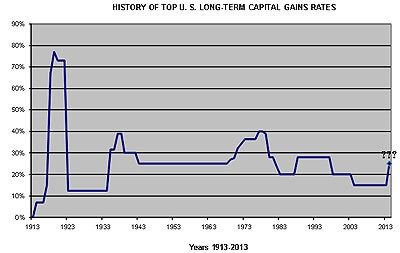
The LTCG tax rate has a volatile history since it began in 1913 as part of the income tax on individuals and corporations authorized by the 16th Amendment. It has been as low as 7% and as high 77%. At 15%, today’s maximum LTCG tax rate is the lowest it has been in the last 78 years

From 1913 until 1922, capital gains were taxed as ordinary income (at 77% when America was fighting World War I). In 1922, when the highest rate on income was 58%, a separate lower maximum rate for capital gains was adopted – 12.5%, until 1934, the second year of FDR’s first term. The rate was then raised to 32% for two years, 39% for two years and then 30% until the United States entered World War II in December 1941. Interestingly, from 1942 until 1968 – through WWII, Korea, Vietnam and with the Cold War on-going – the LTCG rate remained at 25%. It then crept up to 40% during Nixon, Ford and Carter years. Under Ronald Reagan it was cut to 20% for five years, then raised to 28%, which lasted for ten years, until, under Bill Clinton it was lowered to 20%. In 2003, under George W. Bush, the present rate of 15% was adopted with a sunset provision that now takes effect at the end of 2012.

The LTCG rate will go back up to 20% on January 1, 2013 if Congress takes no action. President Obama has stated he will not allow the Bush tax rates to be extended again. Will they be 20% again, or, with current budget deficits and a $14 trillion national debt, will revenue sources be on the table? If so, where better in Washington’s view to raise taxes, than to return capital gains to more historical levels? Pundits and tax-watching organizations diverge on their estimates, with Citizens for Tax Justice in January 2011 seeing a 25% LTCG maximum rate in 2013. Howard Gleckman, of the Tax Policy Center writing in the Christian Science Monitor in April 2010 said his “best guess is that the top tax rate on capital gains and dividends in 2013 will be almost 24%.” In February 2011, The Kiplinger Tax Letter said Obama wants Congres

While many factors enter into choosing the best time to sell a specific business, the prospect of paying more to Uncle Sam if the sale (of all or part) of that business closes after December 31, 2012 is already on the minds of some savvy owners contemplating an exit event within the next three years or so. Consider the following two hypothetical examples.

Today, if a business owner has $10 million in long-term capital gains, the tax at 15% will be $1.5 million. However, if the LTCG rate were to return to 28%, the extra $1.3 million tax bite would reduce take-home proceeds from $8.5 million to $7.2 million, a 15% shrinkage loss for family and philanthropic uses.

Alternatively, to realize today’s after-tax proceeds at higher future LTCG rates (and a constant pricing multiple), the business would have to generate a significantly higher Earnings Before Interest, Taxes, Depreciation and Amortization (EBITDA) as shown below (in $000s).

LTCG Rate Required EBITDA Assumed Multiple Required Proceeds Taxes Take Home
15% 2,000 5 10,000 1,500 8,500
Future Rates?
20% 2,125 5 10,625 2,125 8,500
25% 2,267 5 11,333 2,833 8,500
30% 2,429 5 12,143 3,643 8,500
35% 2,615 5 13,077 4,577 8,500

Where do you think the long-term capital gains rate is going, and how will that affect your plans? How much would you need to increase your revenues at a constant profit margin to cover the added tax burden, and how long would that take?

If you are an owner who intends to harvest your long-term investment soon, Uncle Sam is making an attractive limited-time offer – the endangered 15% Capital Gains Tax. But to take advantage of this offer, action is required. The typical sale of a middle market business – to an unrelated party, an ESOP or even management – requires six to twelve months (depending on factors often beyond the seller team’s control) from the time a financial advisor is engaged. To close a transaction by December 31, 2012, discussions and planning should begin soon. As that deadline draws nearer, buyers and advisors will get busier. In the world of taxes, ‘almost getting it closed by the deadline’ doesn’t count, and could cost you a lot of money.

If EdgePoint can be helpful to you, please call us at (216) 831-2430. Russ is at extension 207; Tom is at 204.

© Copyrighted by EdgePoint. Russ Warren can be reached at 216-342-5859 or via email at rwarren@edgepoint.com. Tom Zucker can be reached at 216-342-5858 or via email at tzucker@edgepoint.com.

Buyers Hidden Risks

By Tom Zucker,
President

The buyer has spent years searching for the near perfect company. The Corporate pressures for growth through acquisition have become intense. The seller and their counsel are pushing for a rapid close. Banks, accountants, and other advisors are creating constant roadblocks to a simple close. With all of these pressures it is easy to understand why a buyer overlook the many risks that they run in successfully buying a company.

A disciplined approach and proper guidance during the acquisition process is critical to ensure that a successful acquisition is achieved. Corporate buyers approaching an acquisition for the first time or with an overextended Corporate Development team are absorbing excessive deal risk which could compromise economic return expectations. The following are several of the most often overlooked risks that Corporate buyers should be aware of as they approach the closing of an acquisition:

  1. Customers Matter. The most important asset in any acquisition is the Company’s ability to sustain historical sales and profits into the future. Ultimately, the individual customers supporting the sales and margins are the most important facts to support. The analytical due diligence associated with customer growth and profitability are only part of the due diligence. Customer conversations, customer centric market research, and talking with key sales people are often essential steps in minimizing the risk that key customers erode or disappear post closing. The risk of customer erosion and deterioration are magnified as the size of the company lessens.
  2. Off Balance Sheet Risks. Beware of that which you can not easily see. The shareholders of Enron will more than support the importance of this statement. Many risks associated with a business may not be known or reported by the company. These risks may include long term pricing contracts which may be subject to pricing revaluation risk. For example, the fuel company entering into long term supply contracts in a highly variable market without the proper pricing protection. Other risks may include unreported environmental issues, employee related liabilities, and latent product liability liabilities.
  3. People Matter. The employees and management of the acquisition company are often an important reason for the acquisition. In the rush to review purchase agreements, negotiate financing documents and to ensure the best terms and conditions, often employees are the forgotten asset. As a general rule of thumb, spend two hours of due diligence and repoire building with key employees and management for every hour that you spend on legal documents. It is important to be creative and persistent as most sellers will try to limit and restrict access to this important asset.
  4. Proven Due Diligence Guidance. It is important to have an independent advisor to guide a Corporate buyer through a successful acquisition. The removal of the emotions, the preservation of repoire with a seller for post closing interactions, and the ability to ask the right questions are just a few of the important reasons to engage an advisor. A formal and structured due diligence methodology that is well thought out and properly executed is critical. A competent advisor will provide 3 times the value to a transaction than the fee charged.

The opportunity that a strategic acquisition presents to a Company has tremendous potential to transform the business’s future. The question whether that transformation is positive or negative is highly dependent on the buyer’s discipline and focus during due diligence.

© Copyrighted by EdgePoint. Tom Zucker can be reached at 216-342-5858 or via email at tzucker@edgepoint.com

Aligning the Stars for Exit- What Turns Buyers On?

By Russ Warren,
Managing Director

Oddly, many a business owner carefully planning a plant expansion or new sales initiative thinks little about meaningfully preparing for perhaps his or her most important project—selling the business at the highest price and on the best terms.

This article, based on experience advising hundreds of owners on the sale of middle-market businesses with sales of $10-100 million, should give you a handle on the process to achieve that goal.

Three Stars need to align for a ”successful exit.” Think: What’s really important to you?

Macro Star – Overall conditions in the hands of others: world markets, the U.S. economy, and industry conditions. M&A pricing markets fluctuate with macro factors: supply of and demand for sellers, financing availability and economic outlook. In April 2015,Macro Staris about as good as it gets, with historically-low interest rates and capital gains taxes. Private equity buyers are eager to deploy cash and lenders are equally eager to deploy capital as they actively pursue opportunities.

Business Star – Attributes you can control or influence (a main focus of this article).

Owner Star – Includes controllable events (e.g., retirement, estate planning, and pursuit of other interests) and noncontrollable concerns (e.g., health issues) of the owner(s). Controllable events can be aligned with Macro Star and Business Star. To some extent, the impact of noncontrollable events can be tempered by planning techniques like leveraged refinancing.

Let’s look at Business Star, and what turns buyers on.
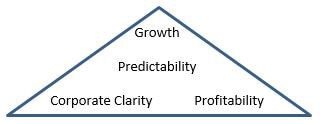
To sell your business for the highest price and on the best terms, you need to optimize and communicate the attributes that buyers are willing to pay a premium for, including:

Corporate Clarity – A business they can understand, and a business model that says “sustainable competitive advantage.”

  • Can you state the essence of your business in a sentence?
  • Have you clearly defined your target customer groups and the value proposition your business offers them?
  • What is your competitive advantage? Is it sustainable?
  • How do your financial results compare with peer companies? Do you benchmark against industry data?

Profitability – Operating profit as a percent of sales and as return on investment (equity). To earn a premium multiple for your size and type of company, buyers want to see an EBITDA margin (adjusted for owner-discretionary expenses) above industry peers.

Predictability – The ability to credibly predict EBITDA (gross cash flow) and operating profit, and the absence of financial surprises.

  • How far ahead can you see into your revenue stream? How could you improve predictability?
  • How dependent is your business on one or a few customers, suppliers or employees?
  • How variable were your revenues in 2008-10? Have you made changes since then?
  • Do you have pricing power? Have you challenged your pricing policies recently?
  • What is changing in the competitive landscape? Do you have a plan to deal with that change?

Growth – Steadily increasing EBITDA and profits over a normal planning horizon (e.g., five years).

  • Have you demonstrated growth in the last five years? Do you havecrediblesales growth projections?
  • Do you understand your addressable markets? Do you have a plan to add geography, customer groups, or new products? Have you made or targeted strategic acquisitions?
  • Is your business scalable?

Financial acquirers will pay for clarity, profitability, predictability and growth.

Strategic acquirers (typically larger companies in your market space) are attracted specifically to things like your intellectual property, reputation or key talent, but they value clarity, profitability, predictability and growth viewed through the lens of “what can we do with the combined business – how much can your business add to our value?”

Getting to alignment – Embarking on the exit planning journey
A well-run sale process normally takes six to nine months from engaging an investment bank until closing. But thinking of how to align those stars … ah, that could take a few months or a few years.

First, clearly define a successful exit – what you want from the event. Certainly, a full, fair price is important – but what else?

  • A customized role for yourself after closing?
  • Protecting key employees or family in the business?
  • Protecting the business’ reputation and service customer levels?

Second, know what your business is worth today, and what after-tax proceeds you expect from a transaction, to see if your personal, family and philanthropic objectives will be met.

Business valuations come in all stripes.For exit planning, you need the amount a willing buyer will pay if the business is offered in a professionally run auction process to an appropriate number of selected buyers. A valuation computes enterprise value (equity plus outstanding debt). In a transaction closing, the owner(s) pay off the debt and keep the cash. Your tax advisor can then compute your expected proceeds, based on enterprise value.

Competition creates value.Surprising to most owners, private-equity firms today may pay more than strategic acquirers. A competitive process generates the highest price, best terms, and greatest certainty of close. The remaining variable is timing. Is time your friend or foe, and what is the risk that your Macro Star will plunge out of alignment at the worst time? Think: Murphy’s Law.

Finally, decide on a start date and assemble your exit advisory team. Working with an attorney with M&A transaction experience can shorten the process and increase your certainty of close. A Tax Advisor, your CPA and any specialists needed to burnish the Business Star or align the Personal Star also have valuable roles to play. The investment banker acts as advisor and quarterback until closing, to keep the process on track. He or she drafts the marketing materials, identifies dozens to a few hundred buyers with a clear reason to own your business, handles communications, and negotiates issues with buyers. Once you have all the stars in alignment, you’re ready to begin the sale process.

© Copyrighted by EdgePoint. Russ Warren can be reached at 216-342-5859 or via email at rwarren@edgepoint.com.